PATENT-PENDING · UNCLASSIFIED / FOUO OVERVIEW

Deployment infrastructure for a contested world.

Cretus Innovations builds low-cost, high-volume launch systems — from container-deployed autonomous missile swarms to air-launched orbital insertion — engineered for rapid mobilization and mass production.
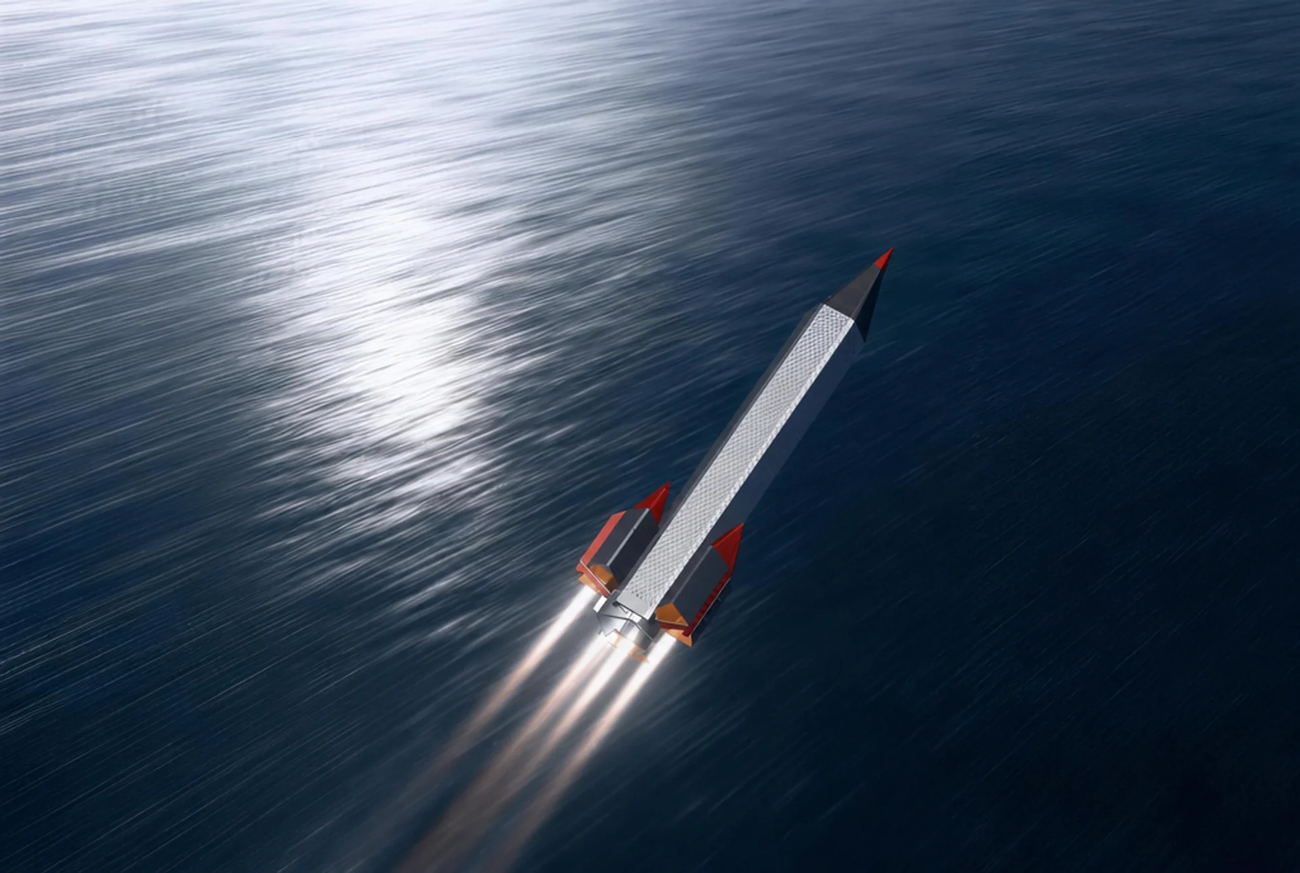
Bee-MX supersonic ramjet missile in flight low over open water
MACH 3.0 · 25,000 FT
36
Units / container launch
Mach 3
Cruise velocity
150+mi
Operational range
<$200K
Unit cost at volume
Patent Pending — U.S. & Foreign Filings
Phase I — Preliminary Studies
Capabilities Overview

Two launch problems. One deployment architecture.

Cretus designs around the same core insight: standard ISO shipping containers and conventional transport can host launch infrastructure that used to require fixed, expensive sites. That applies equally to distributed fires and to orbital access.

Bee-MX — Concept Film

See it deploy, end to end.

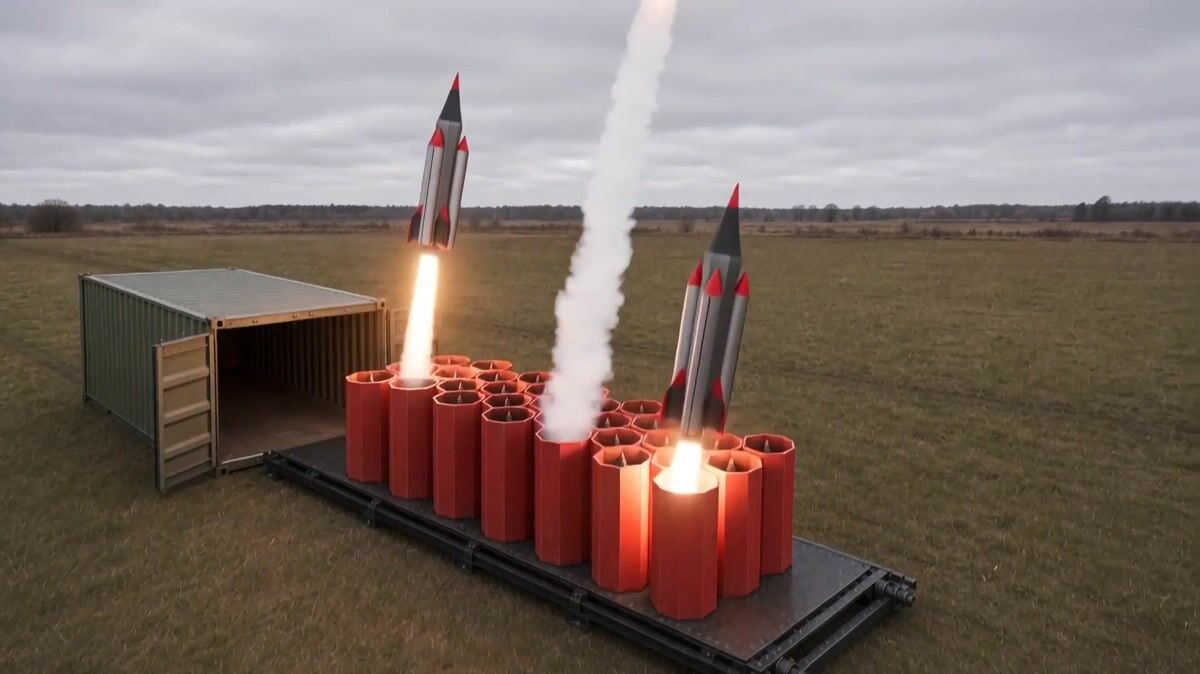
Forty seconds, start to finish: shipping container, emplacement, salvo, cruise. Everything below is the detail behind it.

Bee-MX concept film: three missiles launching from the extended hexagonal launch rack beside an open 40-ft ISO container in an open field
BEE-MX / CONCEPT FILM
Concept render
Bee-MX — Containerized Strike System
Animated concept sequence. Not test footage, and not a depiction of qualified hardware or demonstrated performance.
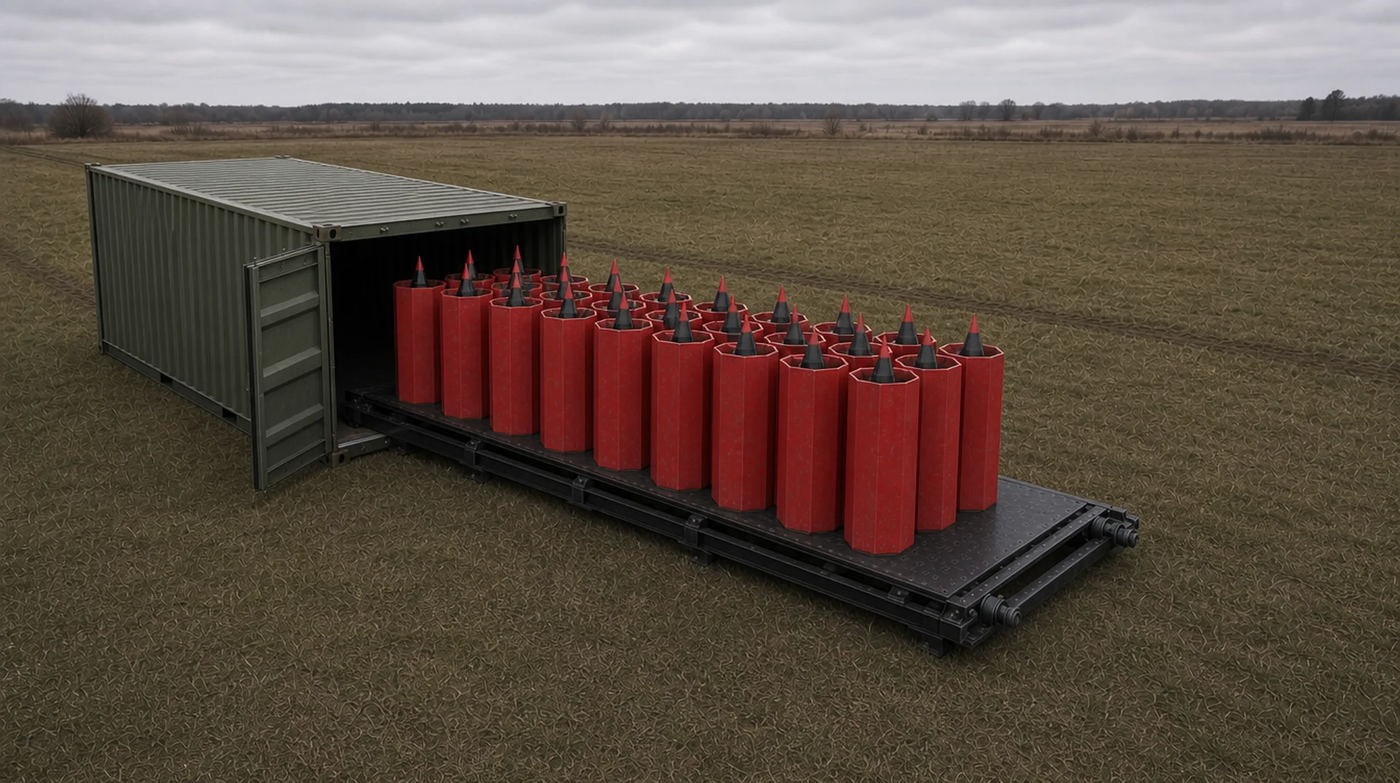
Bee-MX launch rack extended from the rear of a 40-ft ISO container in an open field, showing 36 hexagonal launch cells packed in offset rows with missile nose cones seated in each cell
36 CELLS / RACK EXTENDED
Concept render
Launch Rack Extended — 36 Cells, Hexagonal Close-Packed
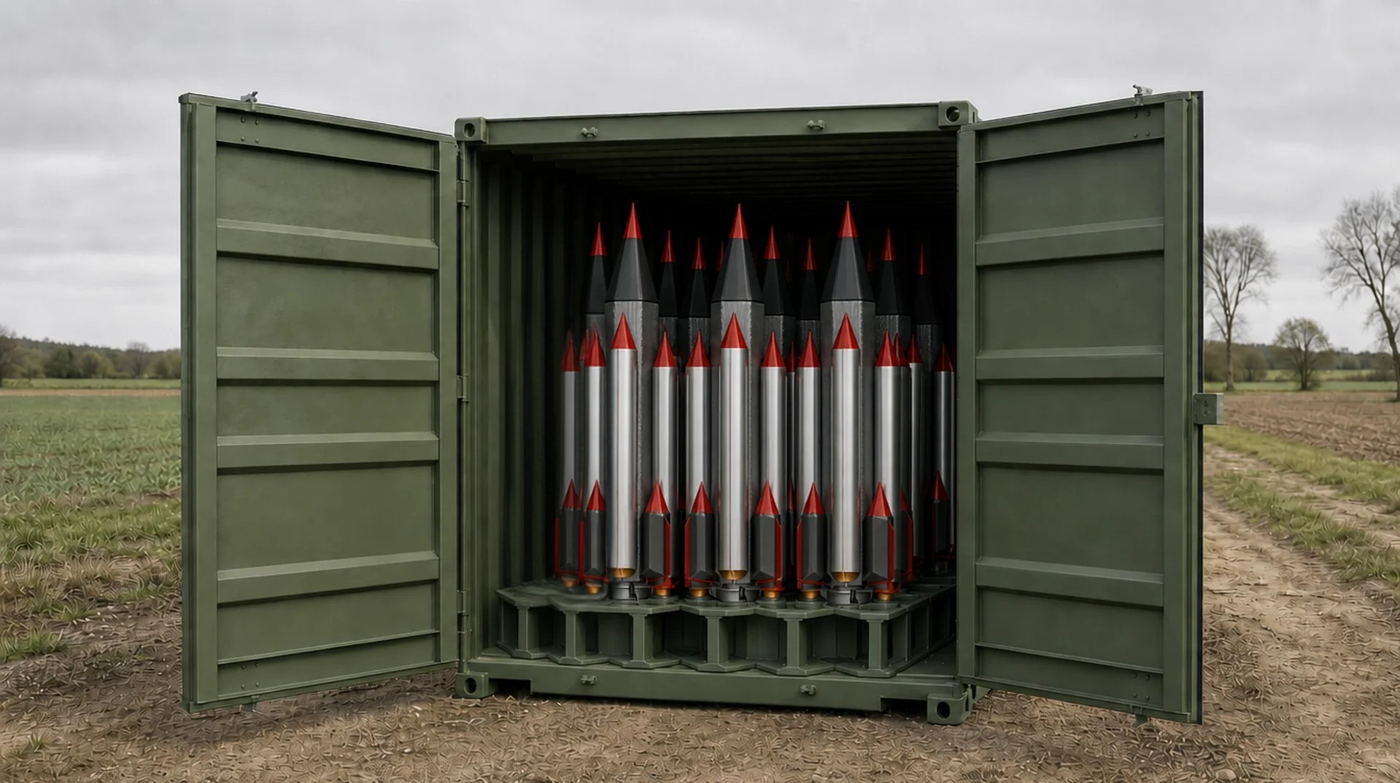
Bee-MX missiles racked upright inside an open 40-ft ISO shipping container standing in a field
STOWED / 40-FT ISO
Concept render
36 Missiles, One Standard Container
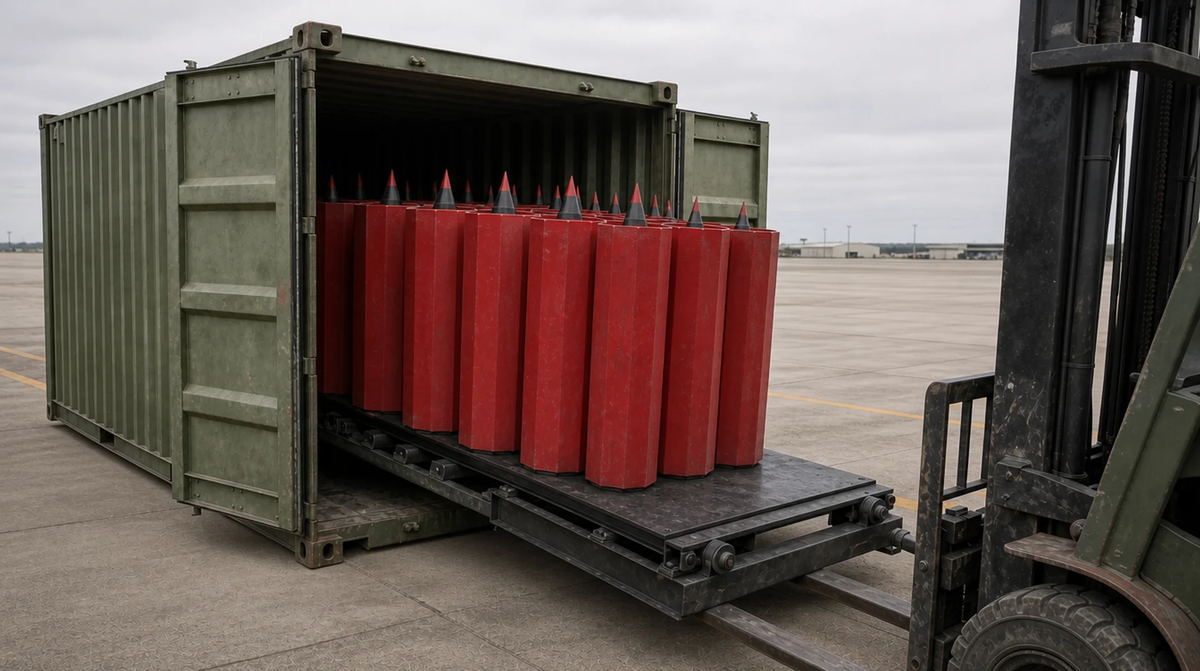
Loaded Bee-MX launch rack being withdrawn from a 40-ft ISO container on an airfield apron by a standard forklift
HANDLING / STANDARD EQUIPMENT
Concept render
Loaded and Handled With Standard Equipment
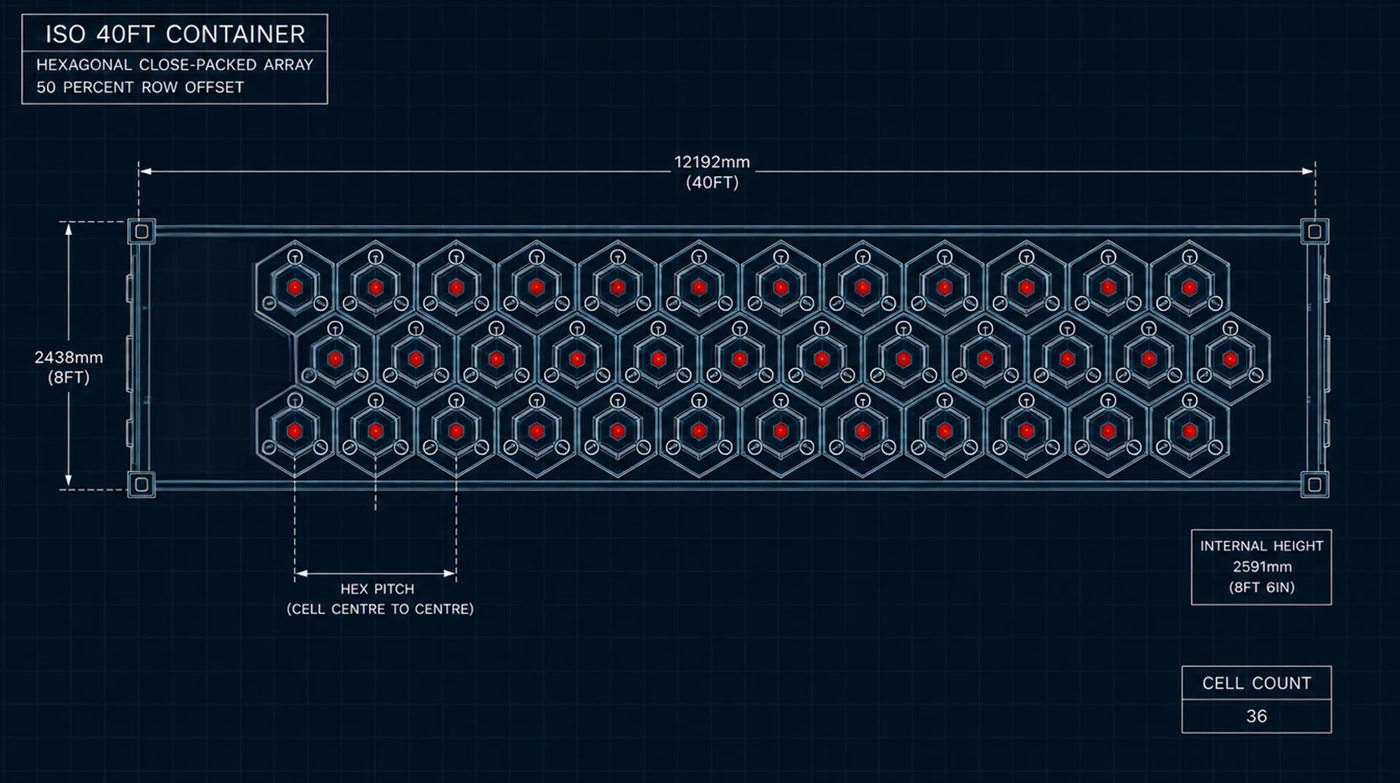
Top-down loading plan for a 40-ft ISO container: 36 hexagonal close-packed launch cells in three rows at 50 percent offset, with internal dimensions marked
FIG. A — PACKING GEOMETRY
Hexagonal Close-Packed Array — 36 Cells, 50% Row Offset · scroll to view full plan
Logistics & Scale

Affordable at scale. Deployable anywhere conventional transport reaches.

The logistical unlock is as important as the missile itself: Bee-MX is built around the intermodal shipping system that already moves global cargo, and a parts-minimized design that makes mass production — not boutique manufacturing — the default.

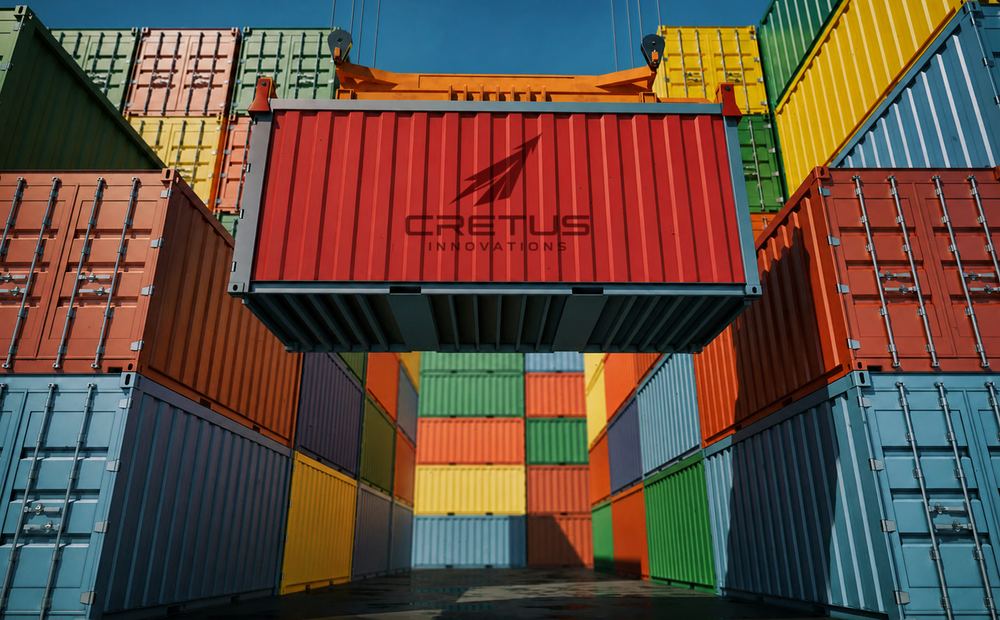
Cretus Innovations branded shipping container being loaded
Transport
Standard ISO Container
Ships, arms, and launches from an unmodified 40-ft container — moved by the same truck, rail, and sea network already carrying global cargo. No dedicated launch pad, crew emplacement, or site preparation.
Unit Economics
<$200K at Volume
A parts-minimized design with a shared central fuel tube keeps control complexity low — a structural cost advantage engineered for mass production, not an incremental discount on a boutique build.
Mobilization
36 Units, <60 Seconds
A full container's complement mobilizes and fires in under a minute — turning any point conventional transport can reach into a temporary launch site.
The sea leg already exists.
Intermodal / Sealift

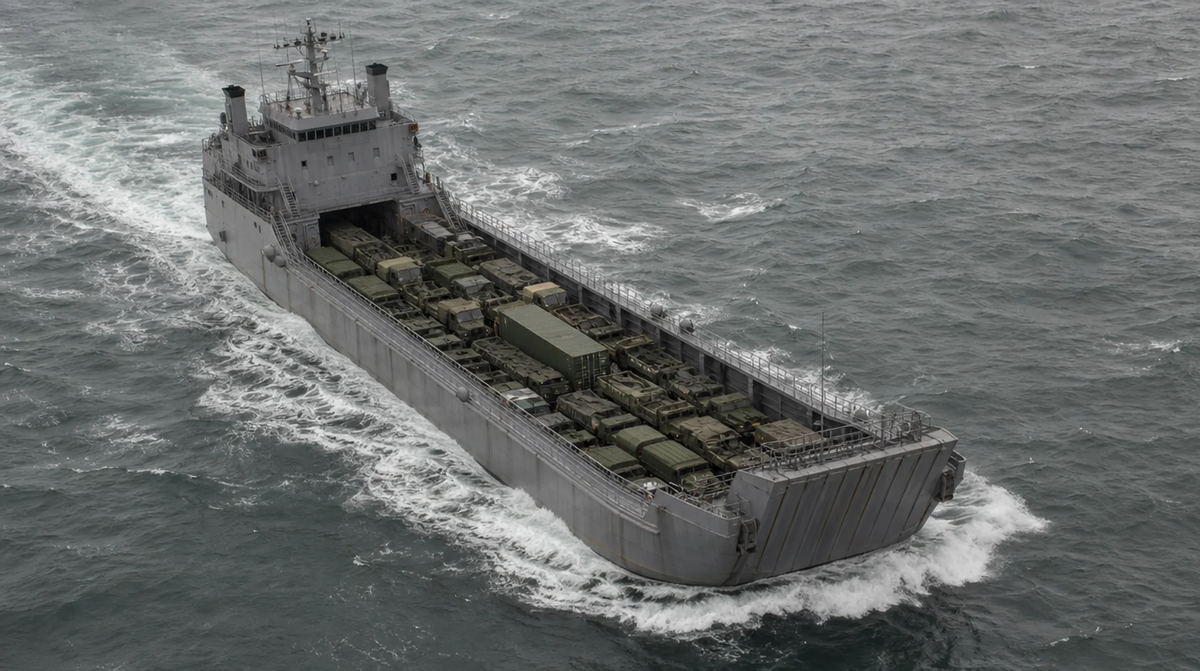
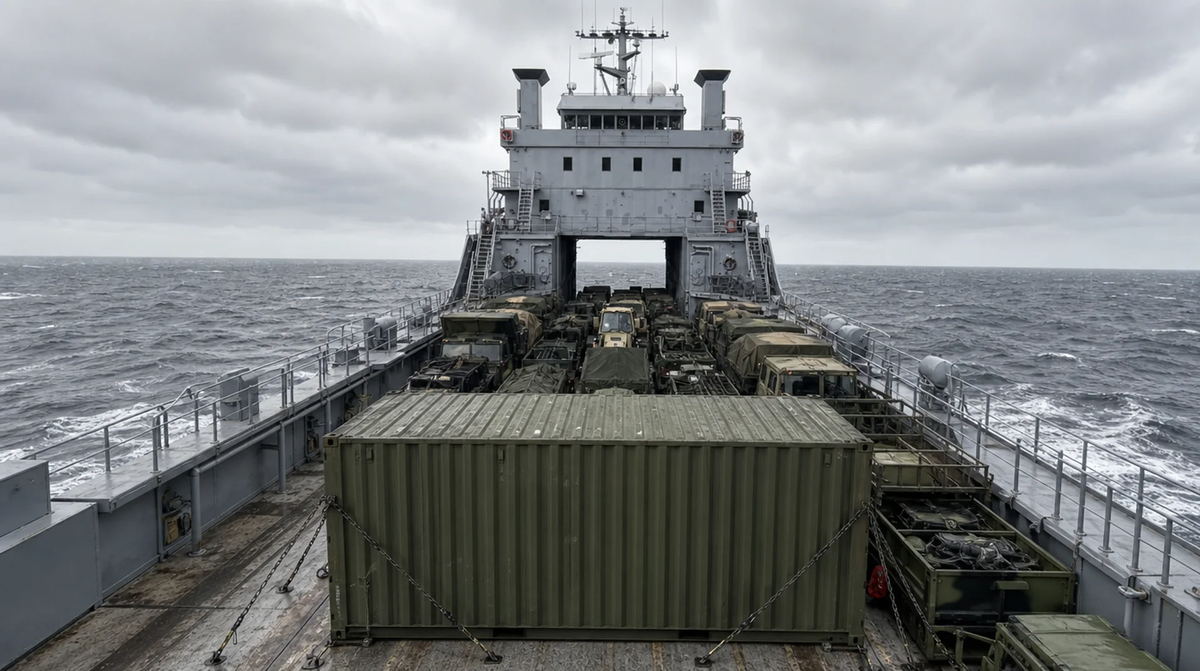
Truck and rail are the easy half of the claim. The harder half is that a 40-ft box moves by sea on hulls and deck fittings that are already in service — no purpose-built carrier, no new handling doctrine.

Aerial view of a military logistics support vessel underway at sea with a fully loaded vehicle deck including a standard shipping container
SEALIFT / VEHICLE DECK
Loaded Vehicle Deck, Underway
Deck-level view along a logistics support vessel at sea showing a standard 40-ft container stowed and chained forward of the vehicle deck
SEALIFT / STOWED FORWARD
Container Stowed and Chained on Deck
Illustrative of the existing intermodal sealift network. Vessels and cargo shown are not Cretus Innovations equipment.
Program 01

Bee-MX Missile System

An autonomous supersonic ramjet missile system, deployable in volume from a standard 40-ft ISO container — the tactical answer to low-cost adversary drone saturation.

PHASE I — PRELIMINARY STUDIES
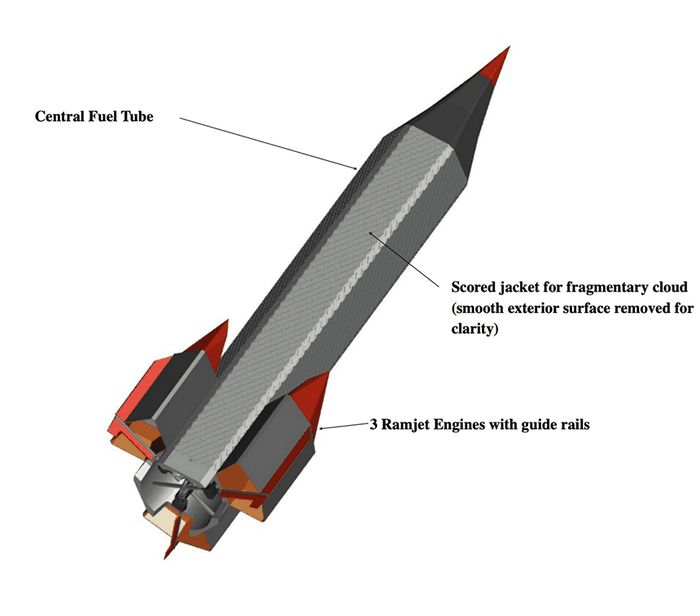
Bee-MX central fuel tube and fragmentary jacket diagram
FIG. 01 — CENTRAL FUEL TUBE & FRAGMENTARY JACKET
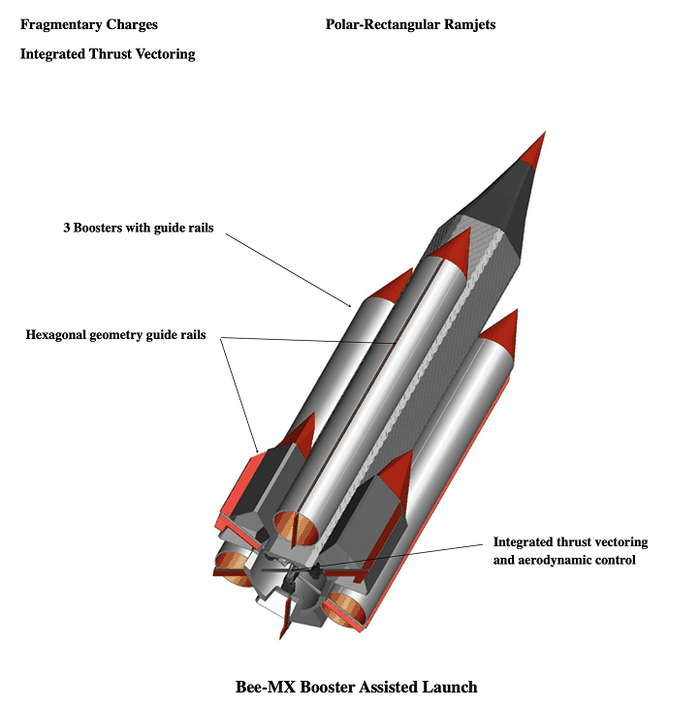
Bee-MX booster-assisted launch and hexagonal guide-rail diagram
FIG. 02 — BOOSTER-ASSISTED LAUNCH & HEX GUIDE RAILS
BEE-MX / SPEC SUMMARYREV. 2026
Height
8 ft (2.4 m)
Body Diameter
12.5" (305 mm)
Launch Diameter
30" (762 mm)
Launch Weight
1,614 lb (734 kg)
Max Altitude
25,000 ft (7.6 km)
Speed
Mach 3
Range
150+ mi
Deployment
36 / <60s
Full engineering specifications, warhead performance data, and test plans available under NDA to qualified government and prime-contractor partners.
Two configurations, one airframe.
Bee-MX / Config A–B

The spec summary above describes the vehicle in two different states. Separated, they read as what they are: a boosted configuration sized to the container's guide rails, and a ramjet cruise configuration that flies the mission.

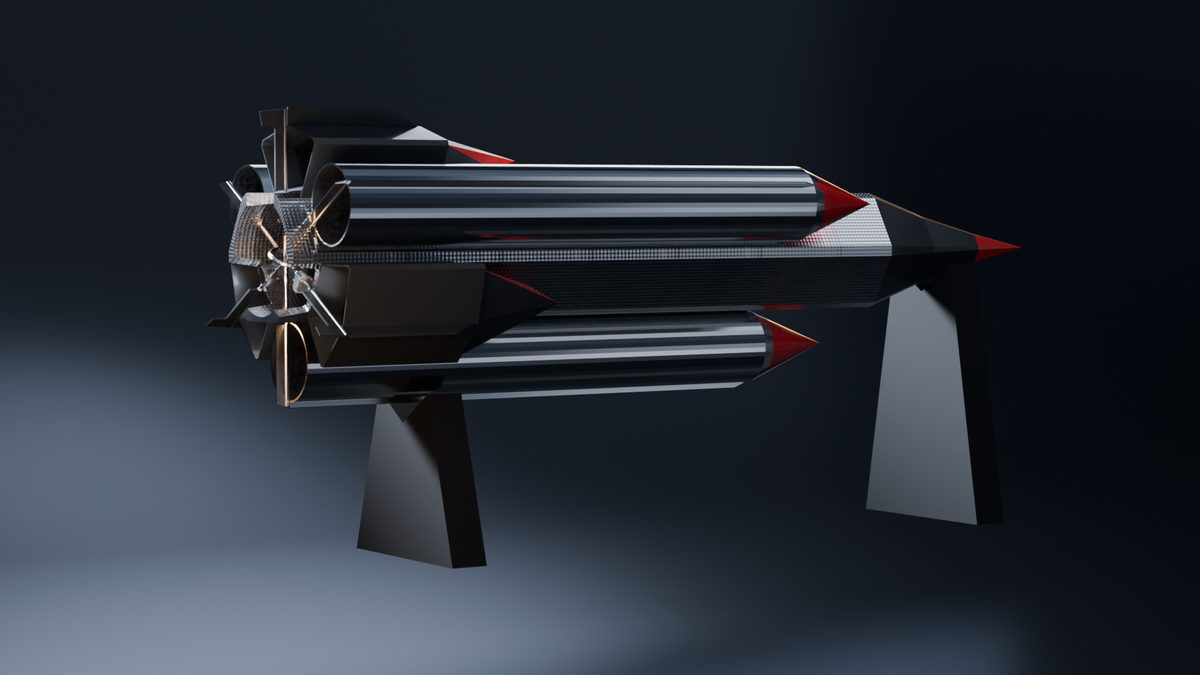
Studio render of the Bee-MX in launch configuration, three-quarter rear view with boosters fitted alongside the hexagonal airframe
Concept render
Config A — Launch

Booster-Assisted Launch

The state the vehicle sits in inside the container: boosters fitted, sized to the hexagonal guide rails that set the 36-cell packing geometry. See FIG. 02.

Launch Diameter
30" (762 mm)
Launch Weight
1,614 lb (734 kg)
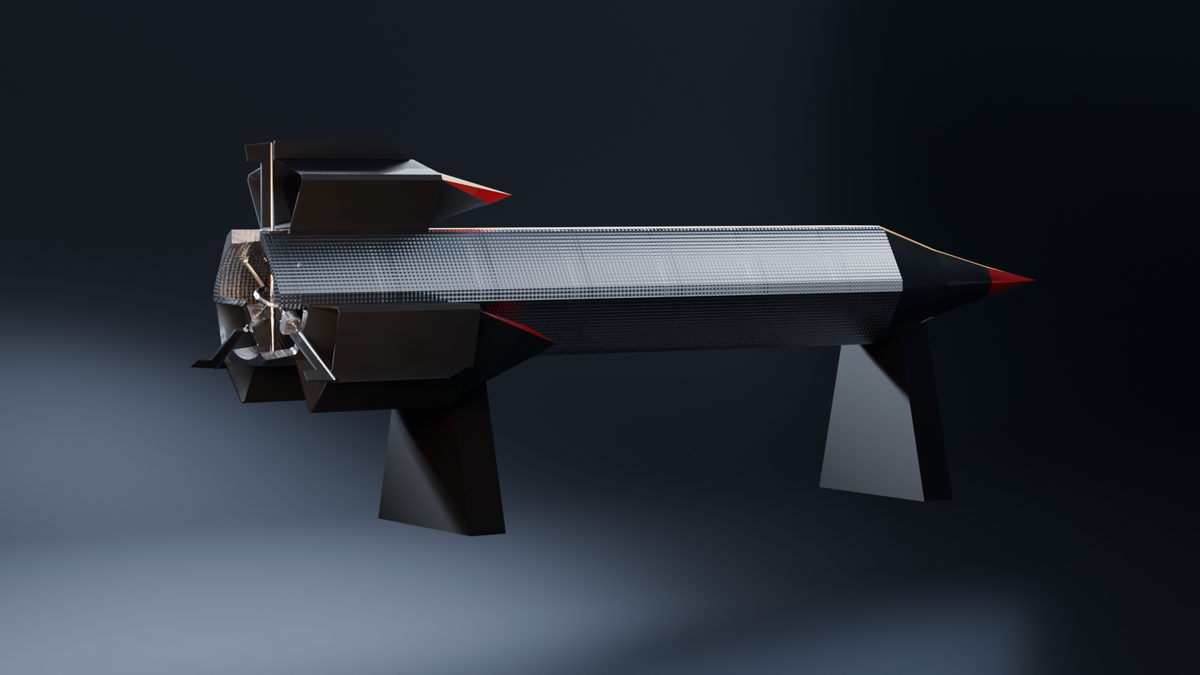
Studio render of the Bee-MX in cruise configuration, three-quarter rear view showing the ramjet nacelles and the knurled hexagonal airframe
Concept render
Config B — Cruise

Ramjet Cruise

Boosters spent. Ramjet nacelles arranged around a hexagonal airframe, with the shared central fuel tube running the length of the body. See FIG. 01.

Body Diameter
12.5" (305 mm)
Cruise Velocity
Mach 3
Program 02

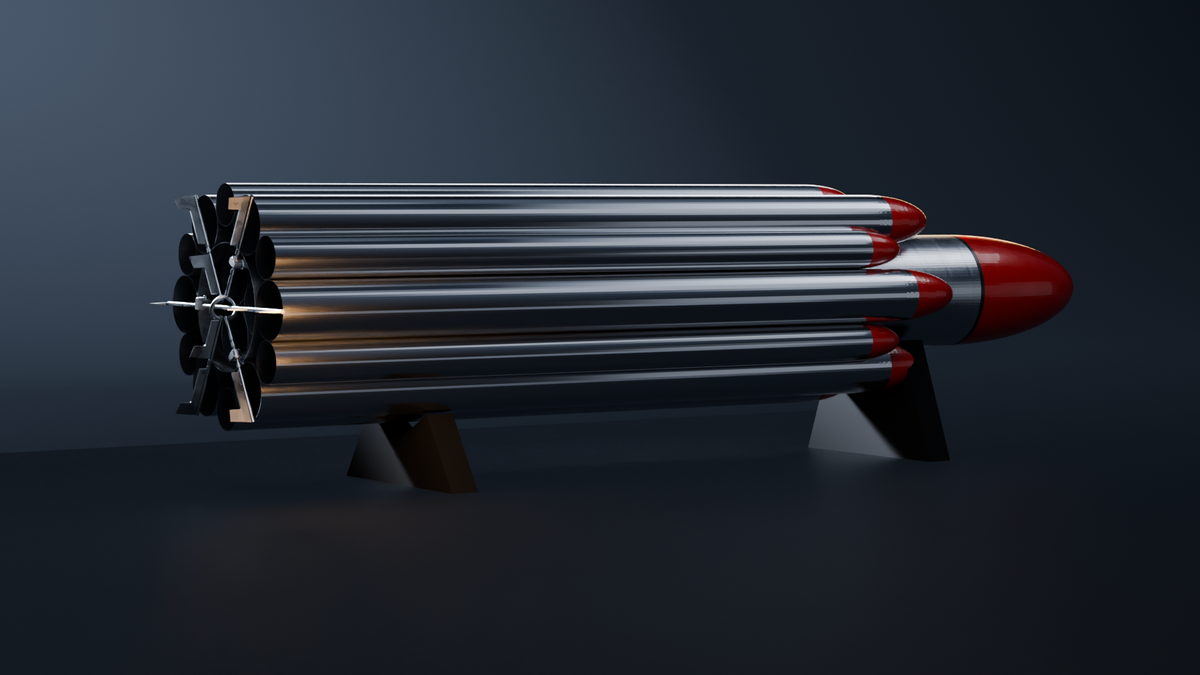
Bee-SL — Air-Launched Orbital Access

Extending the same container-and-conventional-transport philosophy to space access: a high-altitude, air-launched capability for placing small satellites into orbit without fixed launch-pad dependence.

CONCEPT / EARLY DEVELOPMENT
  • Shares design lineage with Bee-MX propulsion and control architecture
  • Mobile carrier aircraft replaces fixed launch-pad infrastructure
Studio render of the Bee-SL launch vehicle: a clustered multi-body air-launched rocket with a red payload fairing
VEHICLE / ORBITAL ACCESS
Concept render
Bee-SL Launch Vehicle — Clustered Configuration
BEE-SL / TARGET PARAMETERSPRE-PHASE I
Launch Mode
Air-Launched
Target Payload
Smallsat
Site Dependency
None Fixed
Status
Concept
Program is in early concept development. Detailed specifications, funding structure, and timeline available on request.
From ramp to orbit.
Bee-SL / Mission Profile
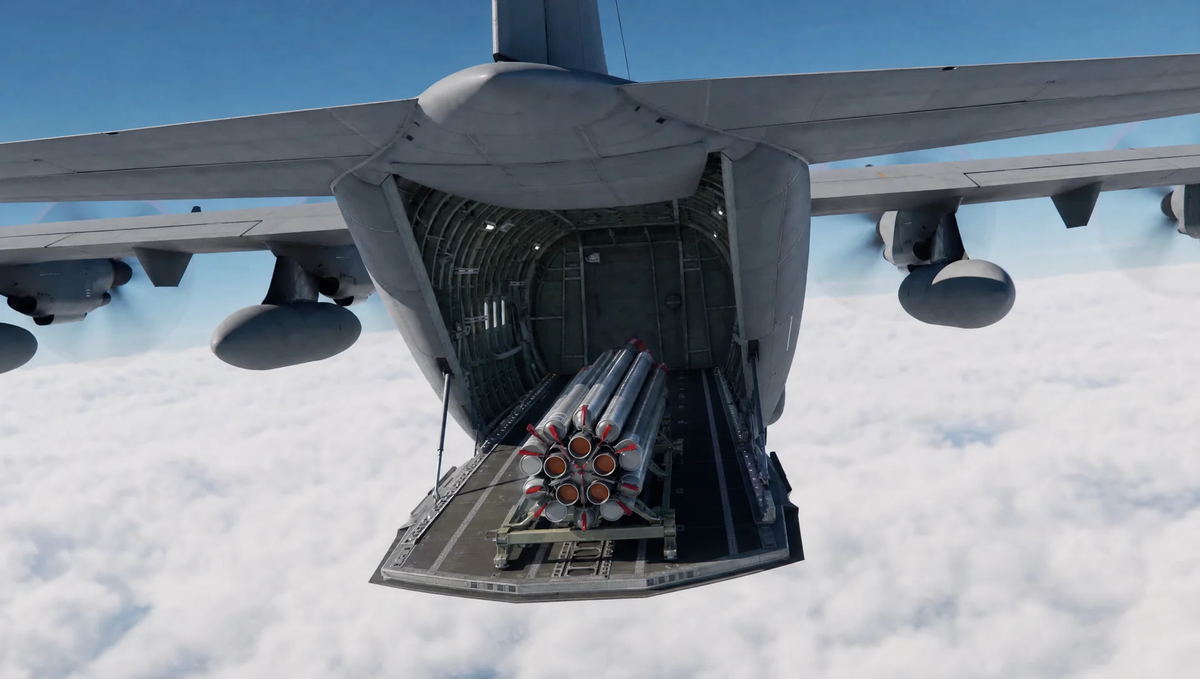
Bee-SL launch vehicle on a pallet at the open rear ramp of a military transport aircraft at altitude, above a cloud deck
AIR LAUNCH / HIGH ALTITUDE
Concept render
Palletized Release From a Conventional Transport Aircraft
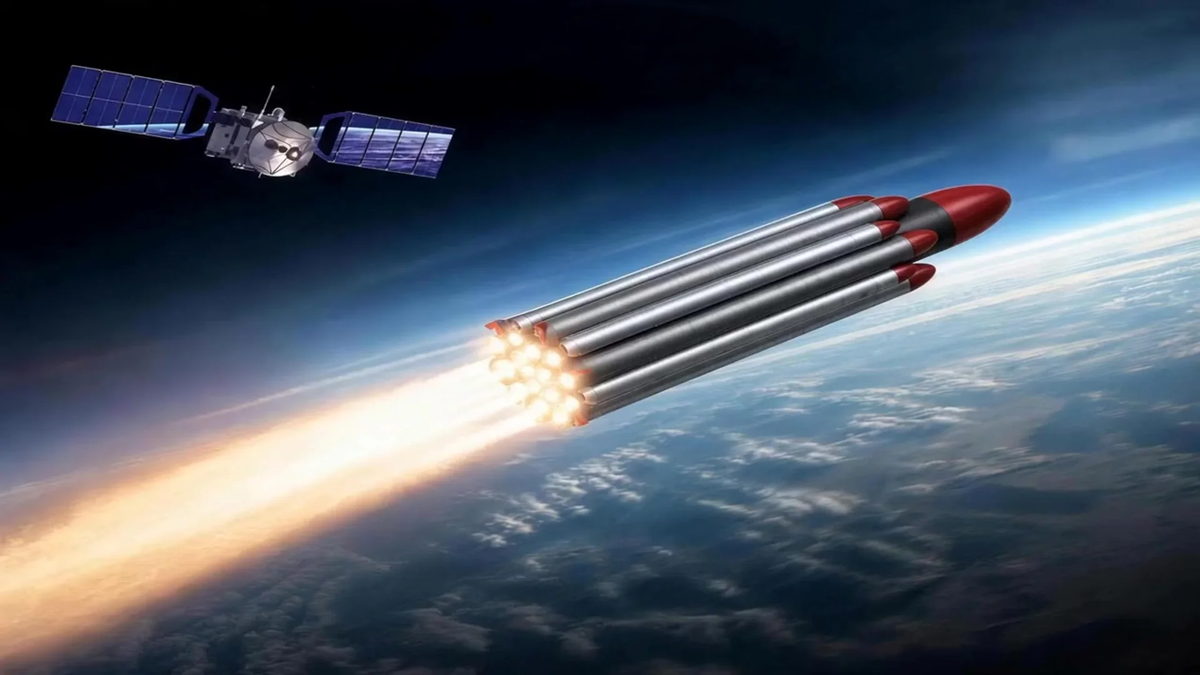
Bee-SL launch vehicle under power above the atmosphere, climbing away from Earth with a small satellite deployed nearby
INSERTION / SMALL SATELLITE
Concept render
Orbital Insertion — Small-Satellite Payload
Plates shown are illustrative concept renders. None is a depiction of the final Bee-SL configuration, of a qualified carrier-aircraft integration, or of demonstrated orbital performance.
Additional simulation data, test footage, and engineering walkthroughs available under NDA to qualified government and prime-contractor partners.
Get In Touch

Request a program briefing.

For government, defense-prime, investor, and strategic-partner inquiries. Detailed technical data packages and financial materials are available under NDA to qualified parties.

Cretus Innovations is developing Bee-MX independently and is actively seeking government procurement opportunities, strategic partnerships, and prime-contractor relationships.
Email David Mouton →
David Mouton
[email protected]